Archbold Welcomes New Research Scientist and Program

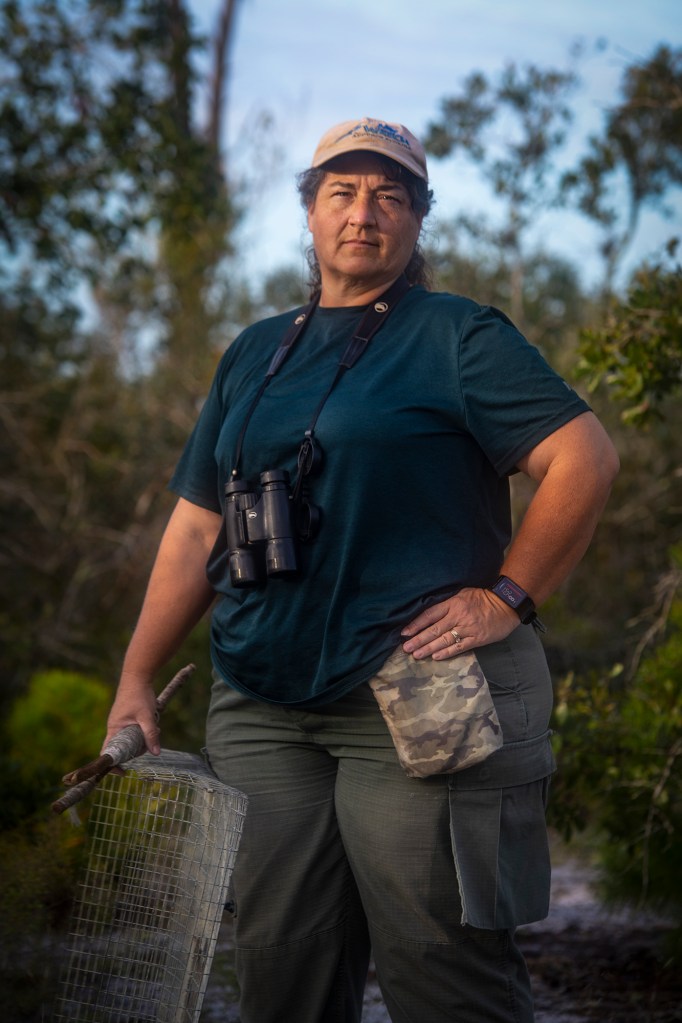
Archbold’s new Predator-Prey Program Director, Joe Guthrie. Photo by Carlton Ward.

Author: Deborah Pollard

Archbold Biological Station is expanding the scope of its current research. With the help of a generous donor, Archbold is re-establishing a predator-prey research program. This exciting partnership represents one of the steps Archbold is taking to help Keep Florida Wild. Led by conservation ecologist Joe Guthrie the Predator-Prey Program will couple scientific research and conservation efforts to better understand and protect wide-ranging species, such as the Florida Black Bear and the Florida Panther, and the habitats on which they rely. Guthrie has worked with Archbold in the past and returns in November from the Smithsonian Conservation Biology Institute in Virginia.


A native Kentuckian, Guthrie studied Florida Black Bears for his master’s thesis at Archbold and on the surrounding conservation sites and working farms and ranches as a student of wildlife ecologist and conservationist Dr. David Maehr at the University of Kentucky. Together, Maehr, Guthrie, and a team which included the late citrus grower and rancher, Mason Smoak, used GPS radio-collars to track the Highlands/Glades Black Bear population across the region, documenting their movements, habitat preferences, social interactions, reproduction, and food habits. Guthrie focused on the impacts of existing and newly planned roads on bear movements and mortality, to inform conservation needs across the South-Central Florida landscape.


The collaborative research inspired a series of conservation expeditions and documentary films highlighting efforts to connect, protect, and restore a 16 million-acre ecological wildlife corridor, known as the ‘Florida Wildlife Corridor,’ through Florida. The Expedition’s 2019 film The Last Green Thread was featured at the D.C. Environmental Film Festival, Mountainfilm Festival in Telluride, CO, and at Archbold’s February ‘On the Lawn’ event held in Lake Placid, FL. An upcoming Florida Wildlife Corridor short film, The Wild Divide, will premiere in January 2021 with a traveling roadshow across Florida, including a screening at Archbold. Guthrie’s collaborations with the Florida Wildlife Corridor and the Florida Wild initiatives will continue through his research at the Station.


Guthrie shared, “I’m so excited to return to Highlands County, which holds such special meaning for me. This is a working landscape, which is where I’ve always wanted to be as a researcher. I can’t wait to get back in the field and get to work.”


The Predator-Prey Program will build on the extensive work of Archbold’s founders. As the Station’s first Director of Research, Dr. James N. Layne conducted studies on nearly all mammals known to Archbold, including the Florida Panther. Dr. Layne’s archive, which is maintained at Archbold and includes his many published manuscripts, data, and field notes, forms an invaluable foundation for the new Predator-Prey Program. In recent years, female Florida Panthers have been documented moving north of the Caloosahatchee River, a breakthrough long sought among biologists and conservationists concerned about the survival of the species. Archbold’s scientists will utilize a variety of methods and technologies such as remote cameras to expand monitoring the community of mammal species, predators and prey, with the intent to study how changes in top carnivores might change the ecosystem.

A Florida Panther is caught with a camera trap located in Highlands County. Photo by Carlton Ward.

Artist Deborah Mitchell visits Archbold

Dr. Reed Bowman, Director of Avian Ecology explains the importance of Red-Cockaded Woodpeckers and their habitat to Deborah Mitchell. Still shot from video by Dustin Angell.

Author: Laura Reed

Archbold recently received a special visit from renowned visual artist and environmental advocate, Deborah Mitchell. She arrived with a specific plan in mind: to showcase the Florida Scrub and Central Florida ranchlands, and to conduct film interviews with Archbold researchers to educate and promote conservation of Florida’s rapidly declining wild spaces through her ongoing project, Wild Observations.

Her artwork has featured many elements of the Everglades ecosystem, including the Headwaters of the Everglades, the vast lands and waters draining south to Lake Okeechobee.  A 2020 quote on Deborah’s website from former Senator Bob Graham explains her role, “The salvation of the American Everglades is dependent of the awareness of Americans and citizens of the world to the global importance of the Glades and their willingness to support its restoration. Exposure through art has been and continues to be an important means of providing this awareness. Through her artistry Deborah Mitchell has devoted her talent and love of the Everglades to its restoration and has contributed to the goal being within a decade of realization. On behalf of this and future generations of world citizens, thank you Deborah for your contribution to our capacity to experience and be sustained by the unique qualities of a rejuvenated Everglades.”

As part of her interest in the Headwaters, Deborah Mitchell is no stranger to Archbold. Her work features photo-based collages and paintings drawn from her travels in the Everglades and beyond. Earlier this year, Mitchell’s installation at the Miami International Airport, ‘Wild Observations in American Flyways’ included six pieces directly influenced by her time spent at Archbold. The exhibition, described as ‘both an ecological and cultural study of observations occurring in our wild places’ was on view from March 12 – July 14th, 2020 in the North Terminal, and now can be viewed at www.debmitchellart.com. When Archbold Biological Station safely reopens, it will host her exhibit for the public, free of charge. 

During her latest visit in October, Mitchell focused on several endangered and threatened species of the Lake Wales Ridge. Over the course of two days, Mitchell and Archbold’s Director of Education Dustin Angell documented birds including two woodpeckers, Florida Caracara, Florida Scrub-Jays, the flower Scrub Blazing Star, Ambrosia beetles, and the Rosemary Bald habitat. Mitchell and Angell recorded 17 topics ranging from ranchlands to museum type natural history collections and filmed special field interviews with Archbold researchers Dr. Mark Deyrup, Dr. Reed Bowman, and Dr. Hilary Swain.

Mitchell shared, “I believe that everything is connected, and am energized by participating in field research to understand the value of biodiversity and what it means in our changing world. My approach is both scientific and intuitive, meaning that the research is based on facts, but my interpretation is inspired by my relationship to the place.”

Now back in her studio, Mitchell uses her journal sketches and photographs to begin the process of weaving art and science into a visual tapestry at once intricate and approachable to the public. Archbold is looking forward to hosting a virtual seminar by Mitchell, to share this and her other work at 3:30pm on January 28th, 2021. More information about how to join this online seminar will be available at www.archbold-station.org.

Art and science may seem an unusual union at first glance but appealing to all sectors of the public audience is essential to spreading the science and conservation message. Archbold Executive Director Hilary Swain explains, “At Archbold, we are reaching new and wider audiences by partnering with artists as science and conservation ambassadors. Deborah Mitchell is one such ambassador. Her careful attention to detail and her ability to meld complex scientific understanding with interpretation of nature is inspiring. Deborah infuses her artistic work with science, communicating the importance of sustaining our natural world.”

Dr. Hilary Swain and Deborah Mitchell at Archbold’s Lake Annie. Photo by Dustin Angell.

Archbold bids farewell to Michelle Dent

Portrait of Michelle Dent as part of the Florida Stewards project by conservation photographer Dustin Angell, which highlights the people working to protect the wildlife and wildlands of Florida’s heartland.

Author: Reed Bowman

There may be few people who know the back roads and trails of Avon Park Air Force Range (APAFR) as well as Michelle Dent. For the last 21 years, Michelle led the monitoring program for Florida Scrub-Jays at APAFR. With only the help of a few seasonal assistants, Michelle trapped and banded all the jays, searched, and found all their nests, and watched the young birds fledge and find mates of their own. She has a genealogist’s knowledge of the jay’s families and lineages—and she cares for their welfare like a doting grandmother.

In a recent interview, Michelle admitted that she did not know jobs like hers existed until after college. She received her BA in Sociology from Principia College in 1992 and worked in related fields until 1997. That summer she interned with the Zoological Society of Milwaukee County monitoring grassland birds, including searching for their nests. Her love of natural history was now fully uncorked and realizing that careers were available in this field, she applied for additional internships. She arrived at Archbold Biological Station in 1998, working with Dr. Reed Bowman, Director of Archbold’s Avian Ecology Program on his long-term study of Florida Scrub-Jays in suburban habitats. Michelle’s independent project compared the behavior of jay fledglings between the suburbs and native scrub, as the young jays began exploring away from the nest. Dr. Bowman recalled, “It was a timely project that showed some really interesting differences in the behavioral development of jays in these two different habitats.” While she was a research intern, and before her internship ended, a position became available on the APAFR jay project and Michelle took it, beginning her long career working for Archbold on the jays at APAFR—a career she could barely dream of just a few years earlier.

Over her years shepherding the jays at APAFR, she watched the population grow and fall, but learned how to best manage the habitat for their success. She has led groups from the Florida Fish and Wildlife Conservation Commission’s volunteer group Ridge Rangers, to implement some of that management at APAFR. She has also been a stalwart advocate for jays and helped create and develop the citizen science program JayWatch, which trains citizen volunteers to monitor jays on public lands across the state. She has attended every annual Florida Scrub-Jay festival, manning booths there and at other festivals and fairs, speaking to other groups, all of which has helped raise the image of scrub-jays as an icon of Florida. For several years, she was the Chair of the Lakes Wales Ridge Working Group, influencing everyone and all the participating government agencies and non-profits that contribute to the protection of the ridge. She always continued her professional growth, eventually earning her MS degree from Antioch New England Graduate School in 1998.

Michelle has also been an intrinsic member of the Archbold community. Michelle and Lauren Gilson, another Archbold tech working at APAFR, initiated the annual Christmas Silent Auction which Michelle has kept alive for 15 years, raising thousands of dollars for support for children to attend Archbold’s Summer Camp. Dozens of children who might not otherwise except for these awards, have experienced the joy of wading in a seasonal pond and learning about the wonders of scrub!

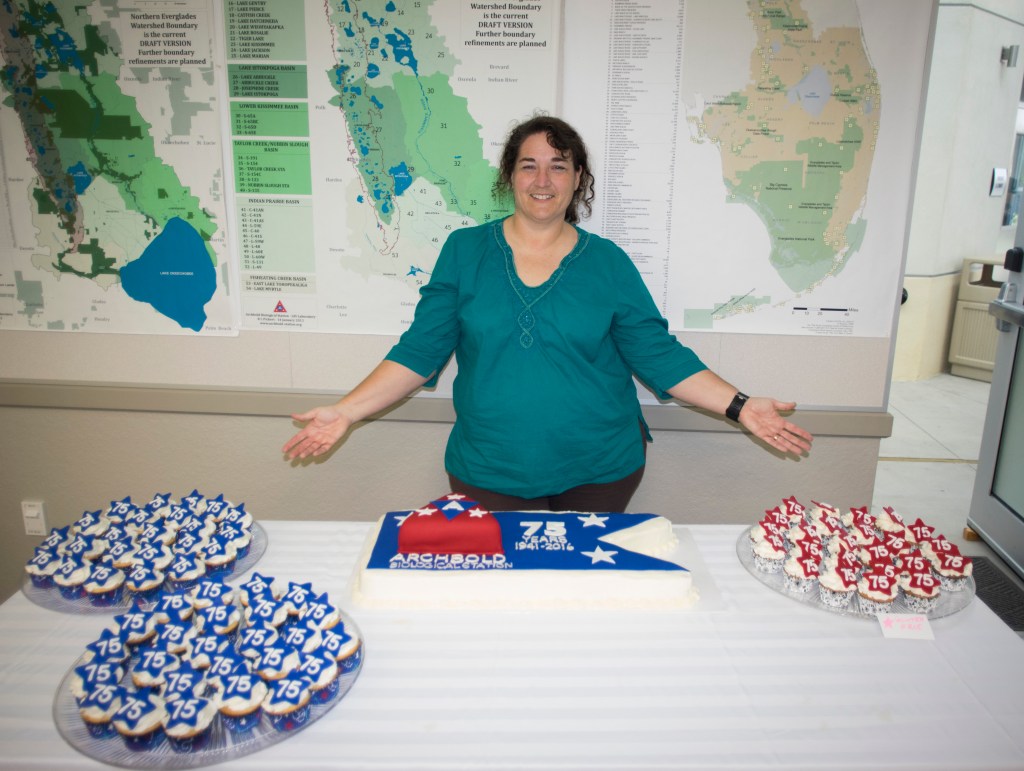
Michelle’s last day at APAFR was Oct. 30. After 22 years at Archbold Michelle reminisced, “Archbold was a great place to work. There is so much cumulative knowledge amongst the researchers working there, it really was a privilege to observe and be a part of. It is inspiring how much people are invested in the research they conduct and how visiting researchers come back year after year. Archbold is like an extended family and I will really miss being a part of it.”  Michelle did not want a big parting shindig but wanted to go birding with her co-workers and friends at Highlands Hammock State Park—the wish of a true naturalist! Everyone had a socially distanced lunch and cupcakes. We might have had a cake, but Michelle is the best cake maker around and you can’t ask someone to bake their own going away cake! Michelle and her husband are heading for drier climes, building a house in New Mexico. She goes armed with a bagful of new field guides, eager to learn the natural history of her new home. We all wish her the best.

Michelle Dent and the cake and cupcakes she baked to celebrate Archbold Biological Station’s 75th anniversary. Photo by Dustin Angell.

Legacy Soil Phosphorus at Buck Island Ranch

Agroecology Research Assistant Megan Selva and Buck Island Ranch Intern Scott Dai taking a deep core at a sample point in an improved pasture.  Photo by Anna Odell.

Author: Megan Selva

For the past few months, at Archbold’s Buck Island Ranch, research assistants and interns have been diligently working to collect soil and vegetation samples to create a detailed map of soil phosphorus on Buck Island Ranch, funded through a grant from the Florida Department of Agriculture and Consumer Services. This new project at Buck Island Ranch is a collaborative effort between Archbold, University of Florida, and Cornell University with the goal of contributing to the reduction of phosphorus flowing downstream.

What is legacy phosphorus?

To understand this issue, it helps to start with a history of Archbold’s Buck Island Ranch, operated as a ranch from the early 1900s. During the 1950s numerous ditches were connected to the newly constructed Harney Pond Canal, which bisects the Ranch on its way downstream to Lake Okeechobee. This enabled rapid drainage, changing the timing, frequency, and intensity of flow events off the Ranch. The same time heralded the beginning of a worldwide transformation in agriculture as fertilizers became available post-WW2. Fertilizers made ranching more profitable on the nutrient-poor sandy soils of Florida. In the period between the late 1940s through the 1980s, extensive use of fertilizers, including nitrogen, phosphorus and potassium, resulted in build-up of phosphorus (or, the ‘legacy P’ issue) in ranchland soils that continues to affect water quality today. Since 1986, when reduced P applications were first recommended, P application has declined markedly throughout the watershed and is now regulated, but the legacy of previous fertilizer P applications in soils is still widespread. Today’s Best Management Practices for grazing lands, which are currently under another major review, aim to ensure that no more P fertilizer is applied than absolutely needed.

Buck Island Ranch is just 10,500 acres of the total ~1 million acres of ranchlands located in the 2.6 million-acre headwaters of the Everglades, the lands and waters that drain south into Lake Okeechobee. Even though P loads from cattle pastures are low relative to other land uses (on a per-acre basis) the large acreage of ranches in the watershed makes them, cumulatively, a significant contributor to overall P loads. Therefore, ranches have been a focus for improved P control. The challenge is that ranches are a ‘non-point source’ of P: with sheet flow of shallow surface water across the ranchlands under high water conditions, together with vast and complex ditching and drainage networks, so there is no readily identifiable ‘point’ source location that can be easily targeted to reduce P loading.

What can we do about legacy soil phosphorus?

Water management practices that increase retention-detention of drainage waters on cattle pastures are a potential solution to reducing P loads. Since 2005, Archbold has been working on examples of these ‘Dispersed Water Management’ practices with state agencies. This started with the voluntary program, the Florida Ranchland Environmental Services Project, and transitioned to the Northern Everglades-Payment for Environmental Services program, both offered by the South Florida Water Management District. Ranchers are contracted to provide water management—either water retention or nutrient P removal.  These programs, along with multiple other projects of state and federal agencies, are designed to mitigate problems of water quality and quantity to Lake Okeechobee. 

With recent funding from the Florida Department of Agriculture and Consumer Services, the Agro-ecology research program collected an intensive grid of soil samples across Buck Island Ranch to make a map of soil P levels. Vegetation samples were collected at the same locations. More than 1,400 soil samples and 47 deep core soil samples were taken during June to October, to be processed in laboratories at Buck Island Ranch, the University of Florida, and Cornell University. Deep core soil samples are about 40” in length are used in this project to determine the amount of P in 6 inches increments of the deep core. Research assistants and interns spent 4-5 hours a day collecting 20-30 samples in the summer heat using trucks, ATVs or by foot to get to sampling locations. Intern Scott Dai says, “As the self-appointed ‘Soil Auger’, my hands were caked in mud every time I did fieldwork for this project. It’ll be cool knowing our hard work will be used by both ranchers and agroecologists.”

Finally, on October 15, Anna Odell, Buck Island Ranch research intern finished grinding the last set of vegetation samples. The day before, Megan Selva, research assistant, finished weighing sieved soil samples. Megan states, “This was a challenging project and a fight to get as many samples collected as possible before the rainy season made sampling sites inaccessible. We were fortunate to have three interns, research staff, and ranch staff to finish the sampling successfully.” The samples were organized by Alan Rivero, research assistant, and shipped to the University of Florida, for detailed soil content analysis, and to Cornell University for soil isotope analysis.

After the soil P map is made, the next step is to plant harvestable forages in these areas so that plants can start to take up soil P and we can harvest the plants to remove P from these areas.

After the sample analyses are completed, Archbold will build a detailed soil P map for Buck Island Ranch. Dr. Betsey Boughton, Research Director at Buck Island Ranch added: “This will provide insights as to how patchy legacy soils are on a typical ranch and help us identify past management practices might explain higher levels of soil P in some locations. Then we will focus our efforts on areas of higher soil P.  The next step is to plant harvestable forages in these areas, so that plants can start to take up soil P and we can harvest the plants to remove P from these areas.”

Buck Island Ranch Intern Anna Odell sitting on the FDACS soil sampling archive organized by Research Assistant III Alan Rivero. Over 1400 samples collected and saved! Photo by Alan Rivero.