Live, Love, Lichen

Author:  Scott Ward

Week 169 Photo1

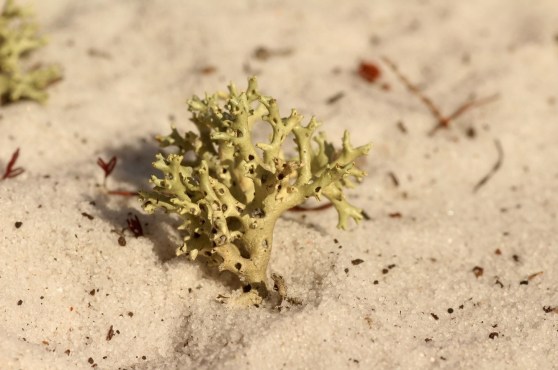
Florida Perforate Lichen Cladonia perforata growing in scrub habitat in Highlands County, Florida. What make this species of lichen unique are the perforations (holes) present along the lichen’s branches. Photo by Scott G. Ward

What do you think of when you hear about mammals, birds, or plants? You probably picture in your head your pet, a backyard bird, or even your favorite flower. If you’re like Seth Raynor, an intern in the Plant Ecology Program at Archbold Biological Station, more often than not you probably think of lichens instead. Raynor has been studying lichen ecology at Archbold for the past few months, discovering all sorts of species previously unknown at the Station. So what is a lichen? Raynor elaborates:

Continue reading

Celebrate Earth Day with Archbold’s ‘Colors of the Florida Scrub’

Author: Hilary Swain

April 22nd, 2020 marked the 50th Anniversary of Earth Day. On this day in 1970, 20 million Americans — one tenth of the U.S. population at that time — joined together across hundreds of cities to demand a new path forward for our planet. There were protests about declining air quality, reduced water quality, and loss of habitat and species, but Earth Day has also always been a celebration of nature, and an acknowledgement that nature is essential to a sustainable life on Earth. The first Earth Day is credited with galvanizing millions of people worldwide to help protect the planet.

To celebrate Earth Day, and to serve all those anchored at home seeking inspiration and solace from the beauty of nature, Archbold Biological Station launched its latest short video ‘Colors of the Florida Scrub’ filmed by Into Nature Films. This new online offering is part of Archbold’s ‘Wonders from Wonderland’ series. Filmmaker Jennifer Brown shared, “The film begins with a flaming orange-red sunrise and a time-lapse of a bright yellow Prickly Pear cactus flower opening. I organized colors into sequences so there is a yellow sequence, a green sequence, a pink sequence, and so on. Florida Scrub-Jays doing different behaviors add splashes of blue and some drama throughout the film. Macro close-up shots of tender pink oak leaves and multi-colored blueberries represent the joy of Spring in the scrub. There are two sequences in the white-brown-black-gray spectrum as a juxtaposition to the more vivid color sequences. In the tradition of abstract expressionism art, I played with removing recognizable forms so viewers can really ‘see’ the colors.”

You can view the 2-minute video from Archbold’s Facebook page and from its YouTube Channel. Also on Earth Day, Archbold hosted a ‘Zoom webinar’ with a viewing of the film followed by a few Archbold panelists on hand to share their personal perspectives of color in the scrub, and to answer public questions about the ecosystem and the film. Please check out Archbold’s YouTube page and its Facebook page to see the replay of the panel discussion.

Archbold Biological Station was established in 1941, nearly 30 years before the first Earth Day. Executive Director, Dr. Hilary Swain describes Richard Archbold, “As a visionary who founded an organization that was way ahead of its time and with a mission, core values, and purpose that have proven timeless. For nearly eighty years, since the day it was founded through to the modern era, it’s been Earth Day every day at Archbold. The organization has always worked in service of the Earth: collecting and nurturing data and findings, managing lands and waters, informing wise policy decisions, and sharing this knowledge with schoolchildren, students, decision makers, and scientists around the world.”

She added, “By holding a mirror up to nature, Archbold allows us all to see the Earth from our own perspectives. The curious find out about the complexity of nature, the analytical explore how things work, artists interpret the intriguing beauty and meaning of colors, shapes and shadows, activists find motivation and inspiration, and those who grew up with the scrub ecosystem as their back yard recall childhood memories and reflect on the heritage of place. All are wonderful reasons to join us to celebrate Earth Day.”

For more information on Archbold events, please visit www.archbold-station.org.

Week 168 photo2

Colors of the Florida Scrub: the wonderful purples of False Foxglove Agalinis filifolia against the saturated greens of Saw Palmetto and Dwarf Huckleberry. Photo by Reed Bowman.



A Fiery Passion for Science

Week_167_photo1

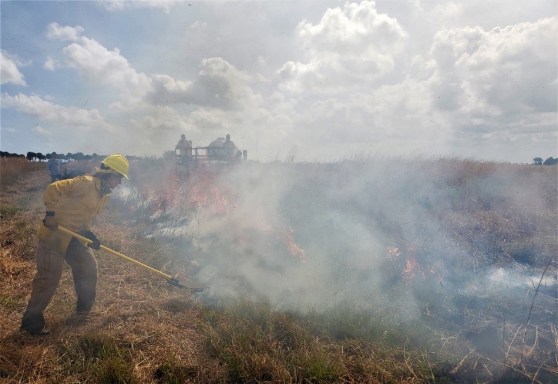
Maintaining the fire line. Photo by Alan Rivero.

Author: Alan Rivero

Have you noticed distant smoke plumes while driving along US Highway 27 or State Road 70? Earlier this year, pre-COVID and before the recent drought-triggered burn ban, it was burning season for many ranchers and land managers in Highlands County. As usual, the research and operation crew at Archbold’s Buck Island Ranch had an active prescribed fire season. Fire is an important management tool for Florida pastures and rangelands and for other Florida habitats. Many native Florida plants and animals require fire to maintain certain vegetation heights and openness. Some plants even require fire to germinate and flower! For ranchers, fire is an important tool for fresh forage and removal of dead vegetation and shrubs. Each year, Buck Island Ranch burn managers, Laurent Lollis and Gene Lollis, in collaboration with the ranch scientists, create a burn plan for the ranch that meets both ranch operational and research needs.

Continue reading

Archbold Provides Free Online Learning

Author: Dustin Angell

MistyMorning_screenshot (1)

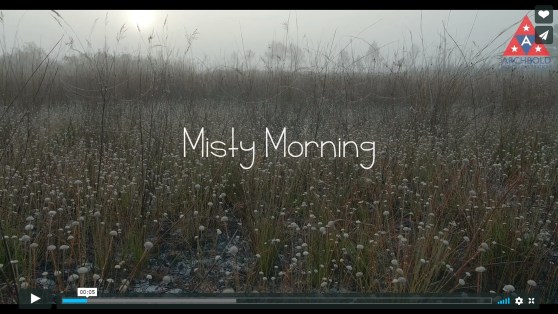
A still shot from the film “Misty Morning: Hatpin Season,” by Into Nature Films. Watch the full video on Archbold’s Facebook page. Photo by Into Nature Films.

As the people of Highlands County adjust to the first week of the Governor’s “Safer at Home” order, many are tackling home projects or finding time to check out new TV shows, while also trying to stay connected and safe. Parents, teachers, and students are living in a new world, with the difficult responsibility of sustaining learning goals without attending school in person, or visiting parks and museums. Archbold Biological Station is excited to offer some support to our community with a variety of free online learning events, educational science resources, and social media content.

Continue reading

Where the Nightjars Are…Research on Nightjars at Archbold Biological Station

Author: Dr. Reed Bowman

chuck

A Chuck-will’s-widow perched on a branch during the daytime. These are nocturnal birds that capture flying insects in the dark. “Chuck-wills-widow” by Scott Heron is licensed under CC BY-SA 2.0

Native Floridians probably grew up listening to the rhythmic call of the Chuck-will’s-widow, singing its name over and over. The Chuck-will’s-widow is nocturnal, a member of a family of birds known as nightjars. In Highlands County, they breed in the spring and summer but fly south for the winter, only to be replaced here in the winter by the Whip-poor-will, another nightjar that breeds farther north. A vast trove of folklore exists around these birds. Their scientific name Caprimulgidae, literally means “goat milkers,” as they were thought to feed on the milk of lactating goats at night. Rather both species are aerial insectivores, mostly catching flying insects on the wing in the middle of the night. The birds have tiny bills that belie their enormous mouths and stiff whiskers to catch moths flitting in the dark. The whiskers are sensitive to touch and help direct insects into their mouth. Think of them as large catcher mitts and the ball is the flitting unpredictable insects. Both species are declining in numbers throughout their range, especially in Florida, yet relatively little is known about them here. In 2019, Dr. Reed Bowman, Director of the Avian Ecology Program at Archbold Biological Station, and Yosvany Rodriguez, a post-baccalaureate research intern from Franklin and Marshall College, began studying them at Archbold. Dr. Bowman said “The decline of these species may be driven by changes in flying insect populations or changes in species’ breeding or wintering habitat. We wanted to understand their preferences for different habitats and patches burned at different times here at Archbold. Does our fire management benefit them?”

Continue reading